FILE NW/017 — HISTORICAL NOTE
ARCHIVE · NEXT WORLDWitold Pilecki: The Real Polish Hero and the Wałbrzych Extraction
Discover the true history of Witold Pilecki, the Polish officer who infiltrated Auschwitz, and his fictional role in the Resonance Portal Wars extraction mission.
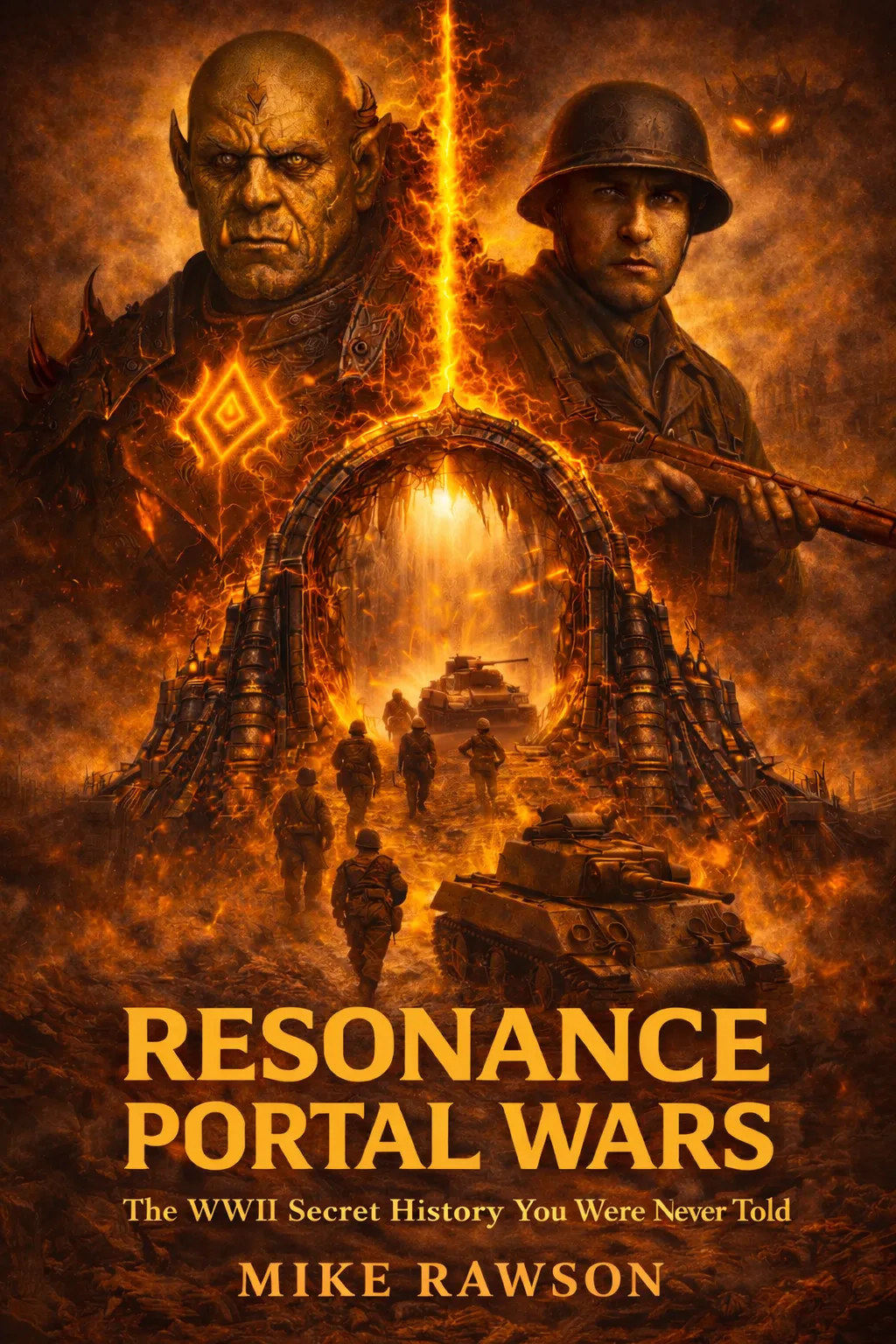
This archive entry explores the real history of Polish resistance hero Witold Pilecki alongside his fictionalised role in the novel. It contains safe, Tier A details from the first half of the book.
The Man Who Volunteered for Hell
Witold Pilecki remains one of the Second World War’s most extraordinary figures. A cavalry officer, intelligence agent, and a leading member of the Polish resistance, he deliberately allowed himself to be arrested and sent to the darkest place on Earth to uncover the truth. In Mike Rawson’s novel, Pilecki’s legacy is honoured by casting him as a seasoned, lethal operative capable of orchestrating impossible missions deep within German-occupied territory. Working alongside British Naval Intelligence, Pilecki provides the grit, nerve, and local network necessary to strike at the heart of the Nazi occult apparatus.
What really happened: Infiltrating Auschwitz
Born in 1901, Witold Pilecki was a veteran of the Polish-Soviet War of 1919–1921. When Germany and the Soviet Union invaded Poland in September 1939, he fought in the cavalry before co-founding the Secret Polish Army, one of the earliest underground resistance organisations.
By 1940, the Polish underground was hearing disturbing rumours about a newly established camp near Oświęcim, known to the Germans as Auschwitz. Seeking to uncover what was happening behind its barbed wire, Pilecki proposed an unthinkable plan: he would intentionally get arrested to infiltrate the camp. On 19 September 1940, he walked into a Warsaw street roundup. Two days later, he arrived at Auschwitz as prisoner 4859.
Over the next two and a half years, Pilecki endured starvation, typhus, and unimaginable brutality. Yet, he achieved his objective, organising an underground military union within the camp (the Związek Organizacji Wojskowej, or ZOW). His network smuggled out the first comprehensive intelligence reports on the camp's atrocities, which reached the Polish government-in-exile in London and subsequently the Allies. These dispatches, later known as Witold’s Report, provided the world with its first confirmed details of the Holocaust.
Realising the Allies were not going to bomb the camp or drop paratroopers to aid an uprising, Pilecki decided he had to leave. In April 1943, he and two other prisoners staged a daring escape by overpowering a guard at a bakery situated just outside the camp’s electrified fence.
What really happened: Uprising and Betrayal
Pilecki’s war did not end with his escape. In 1944, he fought in the Warsaw Uprising, initially serving as a regular rifleman under a pseudonym so as not to reveal his rank to his superiors. When his commanding officers fell, he revealed his true identity and took command of an entire sector, holding out against overwhelming German forces until the uprising capitulated. He spent the remainder of the war in a German prisoner-of-war camp.
Following the Allied victory, Pilecki remained loyal to the Polish government-in-exile and returned to a Soviet-occupied Poland to gather intelligence on the new communist regime. He was arrested by the secret police in 1947, subjected to savage torture, and condemned in a sham trial. Witold Pilecki was executed on 25 May 1948 in Warsaw’s Mokotów Prison. The communist regime suppressed his story for decades, and his heroism was only fully recognised by the world after the fall of the Iron Curtain.
In the novel: The Wałbrzych Extraction
In the novel, Pilecki is introduced during a critical briefing in the underground command room beneath the Treasury in Whitehall. The British High Command is struggling to counter Hans Kammler and his cross-dimensional project, Die Glocke. Commander Ian Fleming is tasked with finding a vulnerability, but direct infiltration into the Owl Mountains is deemed suicidal.
It is Pilecki who steps forward with a bold alternative. He identifies Dr Fritz Houtermans—a brilliant physicist trapped inside the Nazi war machine who is terrified of the reality-bending forces Kammler is unleashing. Pilecki’s Home Army contacts have found a rare opening: Houtermans will be attending a small birthday dinner in occupied Wałbrzych, protected by only a single SS driver.
Forty-eight hours later, the extraction unfolds in the fog-drenched, cobbled streets of Wałbrzych. When Houtermans steps outside the restaurant for a cigarette, Pilecki and his operatives wait in the shadows.
Pilecki moved first. In a blur he surged forward, his knife driving up beneath the man’s jaw, silencing him in a single, brutal stroke. A wet gasp, a spray of blood against the car window. Houtermans froze. The cigarette burned down between his trembling fingers, forgotten. Smoke curled as his wide, terrified eyes locked on Fleming’s. Before he could react, the second operative had him—hand clamped over his mouth, a pistol pressed into his ribs. “Not a sound,” Pilecki whispered.
The extraction quickly fractures into a desperate pursuit. Fleming drives the stolen getaway vehicle while Pilecki and two young Polish operatives, Janek and Stefan, provide armed cover. When an SS patrol truck intercepts them, a brutal chase ensues. The cost of the underground war is shown in stark, unforgiving terms when nineteen-year-old Janek is fatally wounded by a burst of German gunfire through the rear window.
Pilecki takes decisive action. As Fleming swerves their vehicle onto a narrow wooden bridge spanning a deep ravine, Pilecki braces himself in the open doorway. Firing a Sten gun into the darkness, his tracer rounds shred the pursuing truck’s front tyre. The Nazi vehicle smashes through the railing and plunges into the abyss, buying the operatives the time they need.
They reach a moonlit field where a Home Army Lysander aircraft waits with its engine running. In a sombre testament to the reality of their war, there is no room on the plane for the dead. Stefan carries Janek’s body into the trees to bury him under a false name, while Pilecki, Fleming, and Houtermans board the flight to Britain.
The Cost of Resistance
The novel uses Pilecki to ground its fantastical elements in the grim, bloody reality of the Eastern Front. While Nazi engineers dream of cosmic dominion, and otherworldly beings fight for the leylines of a dying planet, men like Pilecki bleed in the mud to buy the Allies a fighting chance.
When Houtermans, shaking with terror on the flight to London, questions why they would risk everything for him, Pilecki’s response is sharp and uncompromising. The scientist claims the Allies have no idea what the Nazis are trying to build. Pilecki stiffens, retorting, “We have some idea.”
The exchange highlights the vast, silent sacrifice of the Polish underground. These operatives fought and died in the shadows to gather the very intelligence the British and Americans were only just beginning to comprehend, proving that even in a war involving alien magic, human courage remains the ultimate weapon.
Keep reading
- Ian Fleming in Naval Intelligence & RPW — Discover the role of Britain's most famous spy-turned-author in the novel's intelligence war.
- Hans Kammler: The SS Engineer of the Bell Gate — Read about the ruthless SS officer commanding the Nazi portal project.
- Die Glocke: The Nazi Bell and the Gate to Ilyndor — Explore the dark science behind Project Riese and the machine tearing holes in reality.
- Operation Biting: The Real Bruneval Raid — Learn how British paratroopers executed daring real-world raids parallel to the novel's operations.
Frequently asked
Who was the real Witold Pilecki?
Witold Pilecki was a Polish cavalry officer and intelligence agent who deliberately walked into a German street roundup to be sent to Auschwitz. Inside, he established a resistance network and smuggled out crucial intelligence before staging a daring escape.
What is Pilecki's role in the novel?
In the novel, Pilecki is a veteran operative of the Polish underground working alongside British Naval Intelligence. He masterminds and executes a high-stakes mission to extract a defecting German physicist from occupied Wałbrzych.
Did the Wałbrzych extraction actually happen?
No, the extraction of Dr Fritz Houtermans in Wałbrzych is a fictional operation created for the story. However, the sequence accurately reflects the brutal, high-stakes tactics employed by the real Polish Home Army during the war.