FILE NW/014 — HISTORICAL NOTE
ARCHIVE · NEXT WORLDIan Fleming in Naval Intelligence & RPW
Explore the real history of Ian Fleming's WWII Naval Intelligence career and his action-packed fictional role in Resonance Portal Wars.
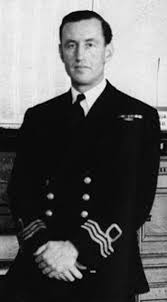
This archive entry contrasts the real-world history of Commander Ian Fleming with his fictionalised exploits in Resonance Portal Wars — Book 1, covering events up to the mid-point of the novel (Tier A).
What really happened: Fleming in Naval Intelligence
Before he created the world's most famous fictional spy, Ian Fleming spent the Second World War as a key architect of British espionage. Recruited in 1939 as the personal assistant to Admiral John Godfrey, Director of the Naval Intelligence Division (NID), Fleming was instrumental in planning covert operations from his desk in Room 39 at the Admiralty.
While he rarely saw frontline combat, his imagination and lateral thinking were unparalleled. He is credited with concepts like the "Trout Memo", which proposed deceptive schemes to mislead the Axis—most famously realised in Operation Mincemeat.
Two of his most significant wartime achievements heavily influence his character in Mike Rawson's novel:
- Operation Goldeneye: In 1940, fearing that Spain might ally with the Axis and threaten the Mediterranean, Fleming drafted a contingency plan to ensure Britain could maintain communications and carry out sabotage operations in Gibraltar and the Iberian Peninsula. He travelled to Spain to establish intelligence networks himself.
- 30 Assault Unit (30AU): Inspired by German intelligence-gathering commandos, Fleming pitched the creation of a specialised British unit. The 30AU consisted of commandos who operated directly on the front lines, advancing alongside (or ahead of) regular forces to seize enemy codes, documents, and equipment before they could be destroyed.
Historically, Fleming was a mastermind of the shadows. In the novel, however, the shadows come hunting for him.
In the novel: The reluctant operator
In Resonance Portal Wars, thirty-three-year-old Ian Fleming is portrayed as a man burdened by the safety of his Admiralty desk. The war has already taken a deeply personal toll; his younger brother Michael died of wounds in France following the retreat to Dunkirk. For Fleming, the desk job is a source of acute, quiet guilt.
"He wrote the plans that sent other men into the dark—clever plans, plans with false bottoms and trapdoors—and then he went to dinner at Scott’s, listened to the bombs, and drank more than he should."
His trajectory changes when Bletchley Park and the SOE intercept impossible reports of massive wolves, shattered commandos, and interdimensional rifts orchestrated by Hans Kammler. Brought into a top-secret briefing with Winston Churchill and MI6 chief Stewart Menzies, Fleming is handed the "Next World" file. Reviewing the dossier, his eyes snag on a recurring Nazi motif: a crude triangle enclosing a single eye. The symbol sets his nerves on edge, prompting Menzies to formally assign him to the newly designated "Operation Golden Eye."
The Houtermans extraction
Fleming's first major field operation plunges him into the heart of German-occupied Poland. The objective is Dr Fritz Houtermans, a brilliant physicist whose early work on nuclear fission is being twisted by the Reich to stabilise their portals.
Working alongside legendary Polish resistance fighter Witold Pilecki, Fleming travels to Wałbrzych to intercept Houtermans outside a birthday dinner. The snatch goes brutally fast, but the extraction descends into chaos when an SS patrol intercepts their getaway. Fleming takes the wheel, driving a stolen car at breakneck speed through the foggy, cobblestone streets, while Pilecki exchanges fire with their pursuers.
In the ensuing firefight, a young Polish operative named Janek is killed. The loss weighs heavily on Fleming, who manages to evade the SS truck by swerving across a narrow wooden bridge over a ravine, allowing Pilecki to shred the enemy vehicle's tyres and send it plummeting. They reach a hidden field where a waiting Lysander aircraft extracts Houtermans. When the terrified scientist questions why they risked so much for him, Fleming retorts that they did it to stop whatever ancient horror the Nazis are trying to unleash.
The Element 115 airlift
Fleming's understanding of the war shifts entirely when he is tasked with escorting a lead-lined container of Element 115 from Wright-Patterson Airbase in the United States back to Britain.
The journey on a C-47 Skytrain is fraught with tension. Refuelling stops in Gander and the Azores offer little respite, and Fleming begins to suffer night terrors—sensing a cold, ancient presence radiating from the cargo. As they cross the Channel, the Luftwaffe strikes. Messerschmitt Bf 109s ambush the transport in the dead of night.
In a harrowing aerial duel, a British Spitfire pilot rams an oncoming German fighter to save the C-47. Fleming himself opens the side hatch, firing a rifle into the screaming wind to down another attacker. But the transport is crippled. Fleming secures the heavy Element 115 container to his harness and bails out into the freezing void.
Parachuting into a dark forest, he lands in hostile territory. When German soldiers close in, Fleming engages them in brutal, close-quarters combat. Armed only with his Walther PPK and a combat knife, he drops three soldiers before British commandos arrive in jeeps to secure the precious, unnatural cargo.
The Darkspire assault
Fleming's pragmatism is fully tested when Elves step into Churchill's war room, demanding a joint strike against the German-held portal in Ilyndor. Thrust into a leadership role alongside Commander Lithariel of the Elven Vanguard, Fleming commands the human contingent during the tactical raid on Darkspire.
The battle is a chaotic fusion of modern warfare and ancient magic. While Elven arrows and spatial Resonance clash with SS machine guns and Orcish shamans, Fleming lays down suppressive fire with his Sten gun. After Lithariel defeats the Orc shaman Balfur Skullrend, she warns Fleming that the local Mana well must be secured to prevent another portal from forming.
Fleming’s response perfectly encapsulates his character in the novel:
"Can’t we just blow it up? I’m a simple man, and I like simple solutions."
Using carefully placed sapper charges, he wires a detonator and obliterates the Mana well. Following the battle, he shares a moment of quiet solidarity with Lithariel, offering her a flask of Scotch over the grave of a fallen Elven scout named Elwin. It is a grim bonding over shared loss, sealing an unlikely alliance between a British desk officer and an Elven warrior.
Keep reading
- Commander Lithariel of the Elven Vanguard
- Element 115 and the 1939 Antarctic Crash
- Hans Kammler: The SS Engineer of the Bell Gate
- The Sundering: The Cataclysm That Broke Ilyndor
Frequently asked
Did Ian Fleming serve as a commando in World War II?
In reality, Fleming primarily worked a desk job for Naval Intelligence, though he visited the field and oversaw the 30 Assault Unit. In the novel, he is thrust directly into frontline combat.
What was the real Operation Goldeneye?
It was an intelligence plan devised by Fleming during WW2 to monitor Spain and defend Gibraltar in case Francisco Franco joined the Axis. In the novel, the name is repurposed for a top-secret supernatural operation.
How does Fleming react to the Elves in Resonance Portal Wars?
He remains highly pragmatic. While encountering Elves shocks the British leadership, Fleming quickly adapts to the tactical reality of fighting alongside them.
What happens during the Element 115 airlift?
Fleming escorts the dangerous material on a C-47 transport plane. Following a dogfight with German Messerschmitts, he is forced to parachute into occupied territory and fight his way out.