FILE NW/015 — HISTORICAL NOTE
ARCHIVE · NEXT WORLDOperation Biting: The Real Bruneval Raid
Discover the real history of the 1942 Bruneval raid to steal Nazi radar technology, and how this daring commando mission is reimagined in Resonance Portal Wars.
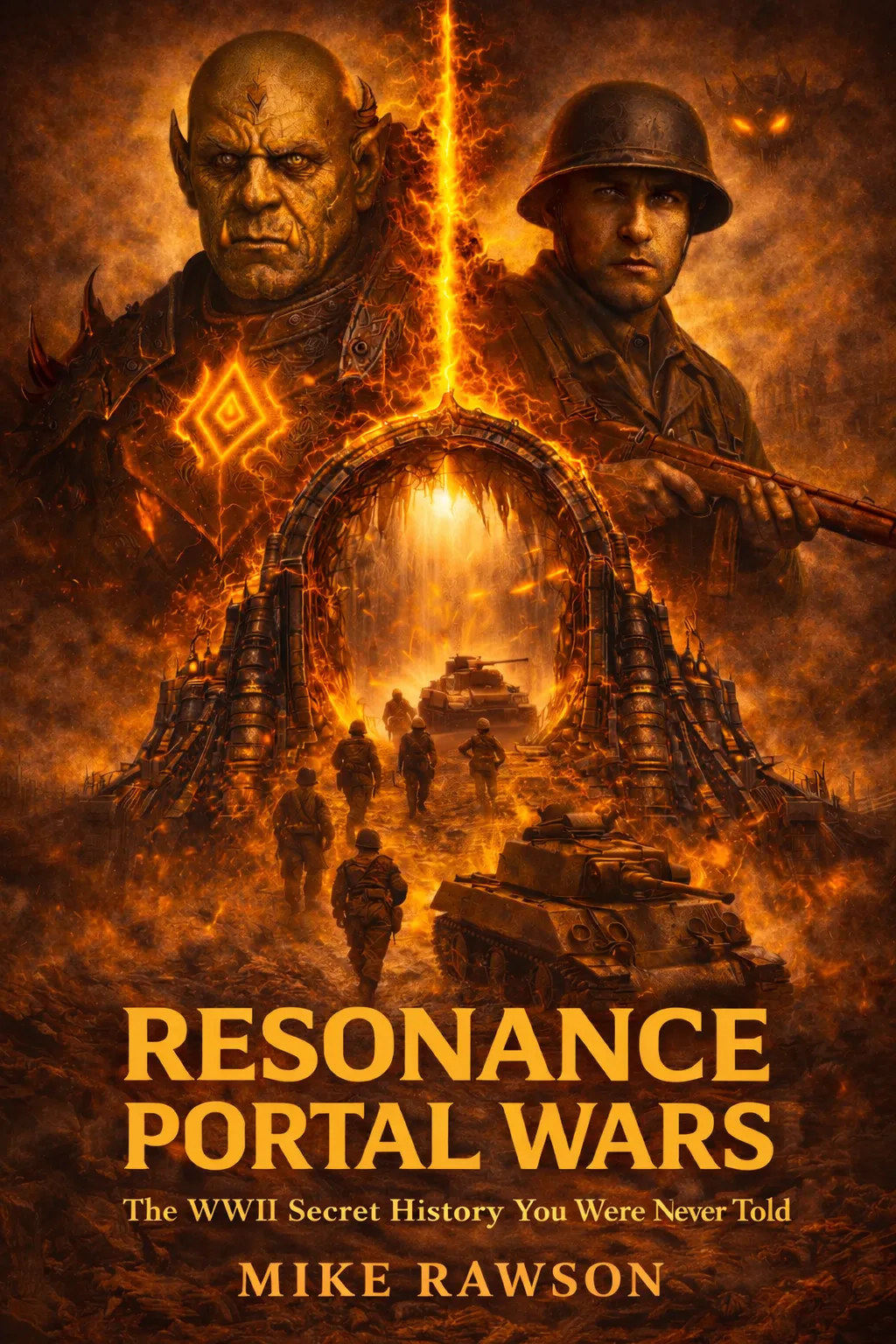
This article covers the real-world history of Operation Biting, alongside its reimagined role in Resonance Portal Wars (Safe to read: contains no plot spoilers for the novel's Bruneval chapter).
What really happened: The Würzburg radar threat
By the winter of 1941, British Bomber Command was suffering unacceptable losses over Europe. German anti-aircraft fire and night fighters were proving far too accurate, picking British aeroplanes out of the dark with lethal precision. British scientific intelligence, led by the brilliant Dr R.V. Jones, suspected a new German radar system was coordinating these defences.
Aerial reconnaissance flights soon confirmed his suspicions. Spitfire pilots brought back photographs of a strange, parabolic dish mounted near a lonely cliff-top villa at Bruneval, near Cap d'Antifer on the French coast. It was the Würzburg radar. The British desperately needed to know exactly how it worked, what frequencies it used, and how to jam it. Bombing the installation would only destroy the evidence and alert the Germans that their secret was out. To beat the technology, the British had to steal it.
The plan: A mechanic falls from the sky
Lord Mountbatten's Combined Operations Headquarters took on the challenge. They quickly ruled out a seaborne assault; the chalk cliffs of Bruneval were too steep and the beaches too heavily defended to allow a stealthy approach from the water. The solution was an airborne raid—a relatively new and unproven concept for the British military, which desperately needed a high-profile success to justify its funding.
Major John Frost, a paratroop commander who would later achieve legendary status at the Battle of Arnhem, was chosen to lead 'C' Company of the 2nd Parachute Battalion. But soldiers alone could not identify the right valves and amplifiers in the dark. They needed a technical specialist.
Enter Flight Sergeant C.W.H. Cox. A former cinema projectionist turned RAF radio mechanic, Cox had never jumped out of an aeroplane in his life. He was given a rapid crash course in parachuting and told he would be dropping into occupied France to dismantle a highly classified German radar set while surrounded by enemy troops. It was an extraordinary request, relying on the bravery of an ordinary technician thrust into the vanguard of the war.
The raid: Midnight at the villa
On the freezing night of 27 February 1942, a squadron of Whitley bombers carried Frost's paratroopers across the English Channel. The drop was largely successful, though the biting wind scattered some sections short of the target in the snow-covered French countryside. Frost rallied his men and advanced on the villa perched on the cliff edge.
A fierce firefight broke out almost immediately. The German garrison laid down heavy machine-gun fire, but the British paratroopers stormed the villa, clearing room by room, and secured the immediate perimeter around the Würzburg dish.
This was Flight Sergeant Cox’s moment. Under the harsh glare of tracer fire and the shouts of combat, Cox rushed to the radar dish. Using standard tools, he began unbolting the critical receiver, transmitter, and amplifier units. When stubborn bolts refused to turn in the freezing cold, he resorted to a crowbar, physically prying the Nazi secrets loose. Time was rapidly running out. German reinforcements were mobilising from nearby garrisons, and the perimeter was shrinking. With the heavy components loaded onto specially designed trolleys, Frost blew his whistle to signal the withdrawal to the beach.
The extraction: A desperate wait on the beach
The descent to the shingle beach was treacherous. The commandos had to eliminate a German pillbox that dominated the evacuation point, moving swiftly before enemy reserves could cut off their escape. Reaching the freezing water's edge, the men waited in the dark, scanning the empty sea.
For a terrifying interval, it seemed the Royal Navy extraction force had missed the rendezvous. German troops were closing in on the cliff tops above, preparing to fire down onto the exposed beach. Finally, the low, welcome rumble of Motor Gun Boats broke the silence. The paratroopers, carrying their precious cargo, wounded comrades, and several German prisoners, scrambled aboard the landing craft under covering fire.
The raid was a spectacular success. The stolen components allowed British scientists to fully understand the Würzburg system, directly leading to the development of 'Window' (strips of aluminium foil dropped from bombers) to blind German radar. Operation Biting proved the deadly effectiveness of airborne raids and provided a massive morale boost to a beleaguered Britain.
In the novel: Re-imagining Bruneval
Mike Rawson's Resonance Portal Wars weaves this iconic commando raid into its sprawling secret history. In the novel, Operation Biting is re-imagined as a critical juncture in the intelligence war. While the true historical raid was a hunt for radio frequencies, the book’s universe introduces a far darker layer of Nazi ambition.
By early 1942 in the story's timeline, British intelligence—including operatives like Naval Intelligence's Ian Fleming—are already uncovering fragments of a terrifying truth. The SS, operating under the command of Hans Kammler, are not merely advancing conventional weapons; they are tearing holes in reality itself using the Bell Gate and the corrupted power of Element 115.
Readers of the novel know that commando raids in this timeline carry unspeakable risks. The disastrous Operation Tilt in June 1941 serves as a grim precedent. When British commandos dropped into Normandy to hunt the infamous Otto Skorzeny, they were ambushed not by conventional sentries, but by Grimfangs—massive, horse-sized war-wolves native to the dying alien world of Ilyndor.
In Resonance Portal Wars, any foray into occupied France runs the risk of encountering forces that defy natural law. The reimagined Bruneval raid honours the immense real-world bravery of men like Major Frost and Flight Sergeant Cox, while escalating the stakes into the realm of epic fantasy and cosmic horror. The soldiers who drop from the sky in Rawson's universe must face the chilling possibility that the Reich’s technology is no longer bound by earthly physics, but fueled by the twisted magic of another world.
Keep reading
- Ian Fleming in Naval Intelligence & RPW
- Hans Kammler: The SS Engineer of the Bell Gate
- Grimfangs: The War-Wolves of Ilyndor
- Die Glocke: The Nazi Bell and the Gate to Ilyndor
Frequently asked
What was the main objective of Operation Biting?
The objective was to capture key components of a German Würzburg radar installation located on the French coast at Bruneval. The British needed to understand the technology to develop effective countermeasures for their bomber fleets.
Who was Flight Sergeant C.W.H. Cox?
Cox was an RAF radio mechanic and former cinema projectionist who had never parachuted before. He volunteered to drop into occupied France with the commandos to dismantle and retrieve the radar components under enemy fire.
Was the Bruneval raid successful?
Yes. The paratroopers secured the radar, Cox successfully dismantled the critical components, and the men were extracted from the beach by the Royal Navy. The intelligence gathered saved countless Allied bomber crews.
How does Operation Biting fit into Resonance Portal Wars?
The novel re-imagines the Bruneval raid within its alternate history timeline. While the real operation hunted radar, commando missions in the book often collide with the horrifying supernatural technologies and creatures deployed by the SS.